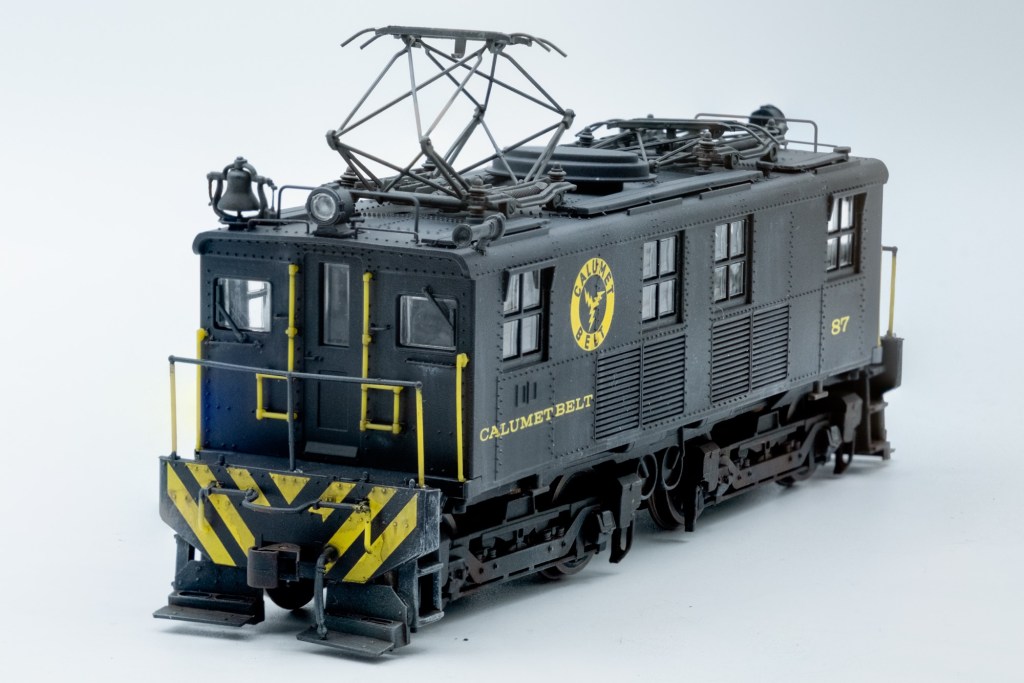
Decades before Calumet Belt acquired big mainline freight electrics like E-44 4402 and its fleetmates, when most of Calumet Belt’s contemporaries were still dragging steel and related commodities with steam, electrics like Calumet Belt 87, a General Electric boxcab, were quietly and cleanly servicing the mills and refineries of northwest Indiana Calumet Region. Calumet Belt’s right-of-way, like many early 20th century interurbans and electric railways, followed in the shadow of electric transmission lines that were the energy lifeblood of the Calumet Region’s heavy industry.
Electric locomotives of the steam era were notable for their long service lives. New York Central S-1 electrics built in the first decade of the 20th century ended their days in Conrail livery after 75 years of service. Iconic Pennsylvania GG1s built during the Great Depression also lasted well into the 1980s in Amtrak, New Jersey Transit, and Conrail service. Even today, nearly 100-year old electric steeplecabs are still in revenue service, knocking cars around the Iowa Traction short line.
Calumet Belt 87 and a few of its brethren, originally rostered in the late 1920s and early 1930s, remained in revenue service into the early 1990s, working yards and especially industry locals in Hammond, East Chicago, and Gary. With their ability to squeal and goat through tight, poorly maintained trackage around mills, refractories, and refineries the GE boxcabs prized by crews. Ten years after South Shore’s ponderous 800-class ‘Little Joe’ 2-D+D-2 electrics switched their last jobs into Gary and East Chicago industry sidings, railfans could still count on catching an antique Calumet Belt boxcab with a cut of steel coil cars or short covered hoppers in the urban industrial wilds of the Calumet Region.
Calumet Belt 87 had been intended to be the first Calumet Belt locomotive model. I particularly enjoy building HO rolling stock from craftsman-style kits—especially those offered by Tichy—and I wanted a mid-century, transition-era electric locomotive to move them around.
Around the time I built a couple of Tichy freight car kits, social media algorithms started showing me Japanese-prototype railroad models, possibly because of multiple purchases of Japan-made Tenshodo power trucks for my Pacific Electric box motor models, and also possibly because so much of my non-railroad modeling involves Japanese-made kits and also supplies like paint and tools.
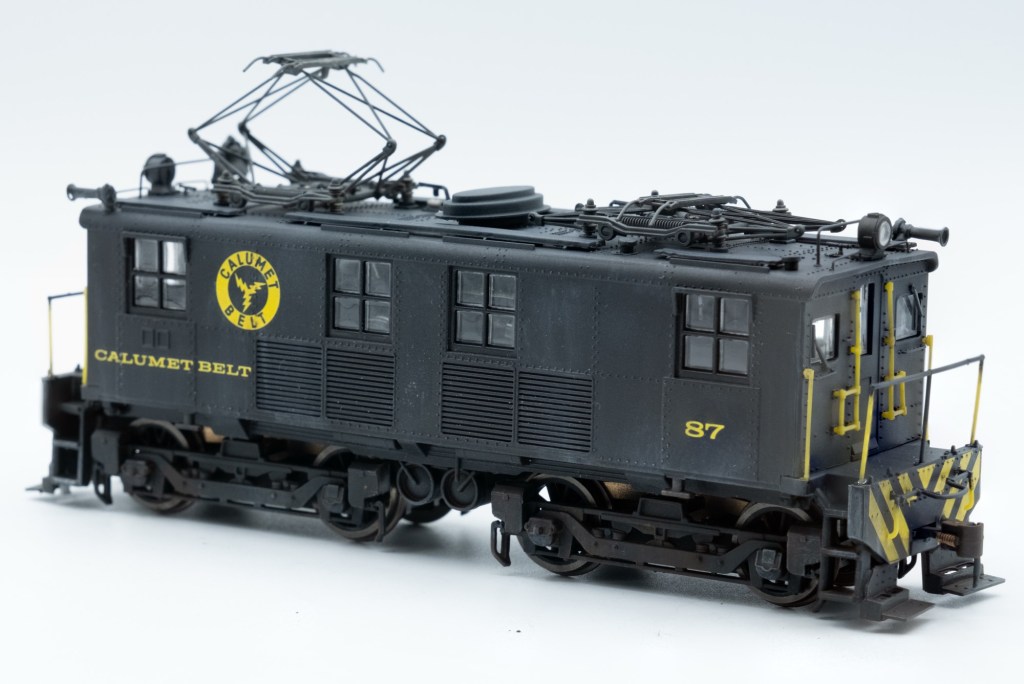
When the Dauphin GE Boxcab model came to my attention via social media feeds, it seemed a dead ringer for GE boxcabs used on early 20th century North American electric lines like the Butte Anaconda and Pacific. (Fellow traction enthusiast Trevor Marshall has since pointed out the uncanny similarities between the Dauphin model and GE boxcabs used on the London and Port Stanley electric line, one of which is now preserved at the Elgin County Railway Museum in St. Thomas, Ontario.)
I looked around unsuccessfully for English-language reviews of the model. Temptation won out, and I eventually clicked through to order the boxcab directly from Dauphin via its Shopify web site, and was not disappointed with the product once it arrived.
The model is 1/80, or HOj, scale but gauged to run on standard 16.5 mm gauge HO track. This discrepancy in scale is an accommodation to Japanese prototype trains, most of which run on 3’ 6” gauge track. (The famed Shinkansen bullet trains run on 4’ 8 1/2” standard gauge, but most of the Japanese network is 3’ 6”). Nonetheless, the model looks ‘right’ in the presence of North American 1/87 rolling stock, and generally gets the proportions and look of a 1920s-1930s electric locomotive right.
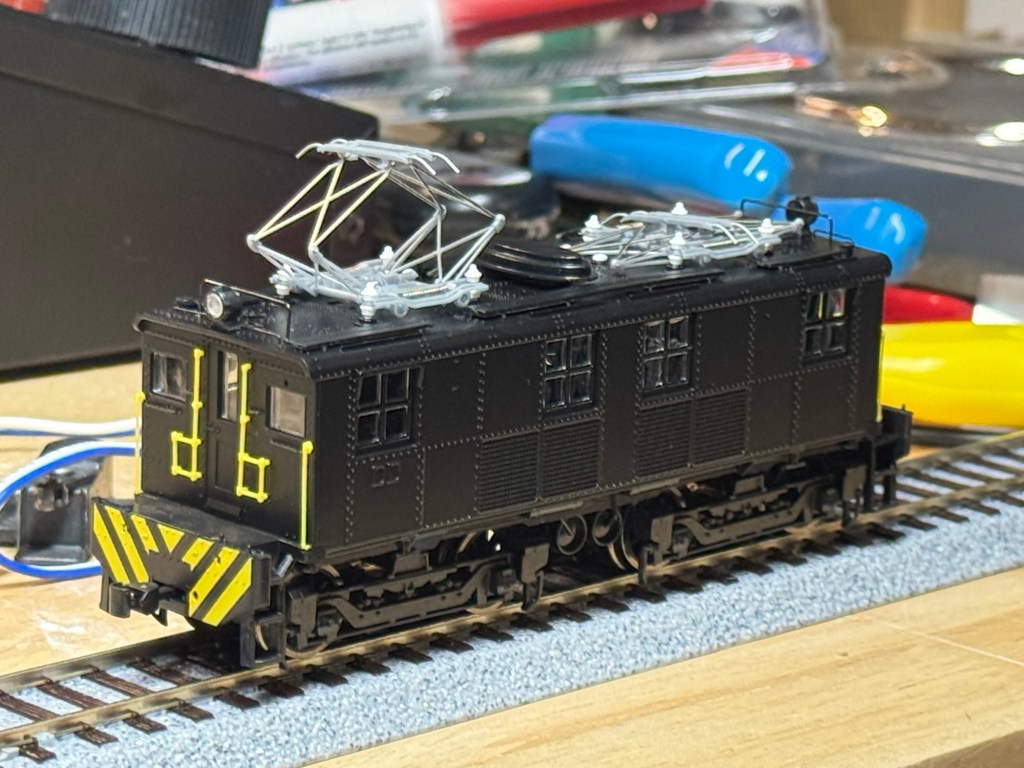
The Dauphin model ran well and looked great right out of the box. The model is painted black, unlettered, with yellow safety stripes and railing details. It has a metal frame, flywheels, pickup and drive on all wheels, directional headlights, and a standard 21MTC DCC decoder socket. An ESU LokPilot 5 decoder was fitted to the model and finishing began.
The finely detailed pantographs are among the best looking I’ve ever seen on an HO model, looking great in either raised or locked down poses. However, they are not ‘operational’ in the sense that they are not springy enough to maintain contact with an overhead wire, and their mostly plastic construction would not be able to conduct electricity. The pantographs’ bases, lower arms, and main collector shoes are injection molded plastic, with photoetch stainless steel upper arms and bent wire horns.
Still, the model needed some additional details to complete the illusion of a North American locomotive. The ends of the Japanese model looked a little “Donald Duck” to me—no pilots or steps below the couplers, so I added pilot details using Evergreen styrene strips and Detail Associates 2209 pilot steps. I also added two Details West 173 horns, and a Details West 344 low profile bell. Before attaching the parts to the model, I painted them with Rustoleum black primer and then a soft over spray of AK Real Rubber Black. I also hit the pantographs and additional parts like the railings, cut levers, and windshield wipers with Rubber Black to tone down their stark contrast appearance.
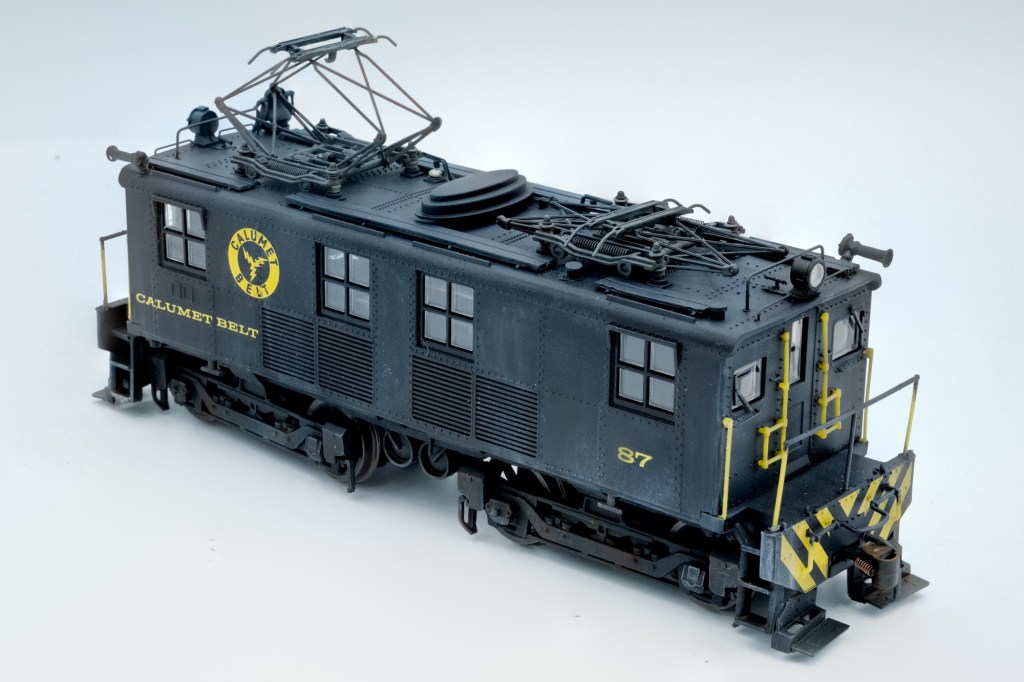
With the colors now established, I next prepared the boxcab model to receive decals and weathering. I used calipers to measure out masks for the windows, and also applied appropriately-sized precut masking dots to the headlight lenses. The masked model then received a coat of GSI Creos GX100 Gloss.
When I designed Calumet Belt decals for custom printing by Circus City, I included variations representing different eras. For early- and mid-century Calumet Belt lettering, I used an extended serif font, reminiscent of many early traction paint schemes. In keeping with Calumet Belt’s overall industrial minimalist graphics theme, I further chose relatively small, scale 9” lettering. A scale 36” herald fit nicely centered underone of the pantographs. The Circus City decals responded well to MicroSet and MicroSol.
Once the decals had set and dried overnight, the model, with windows still masked, received a sealing coat of GX100 Gloss, which provided a foundation for weathering steps.
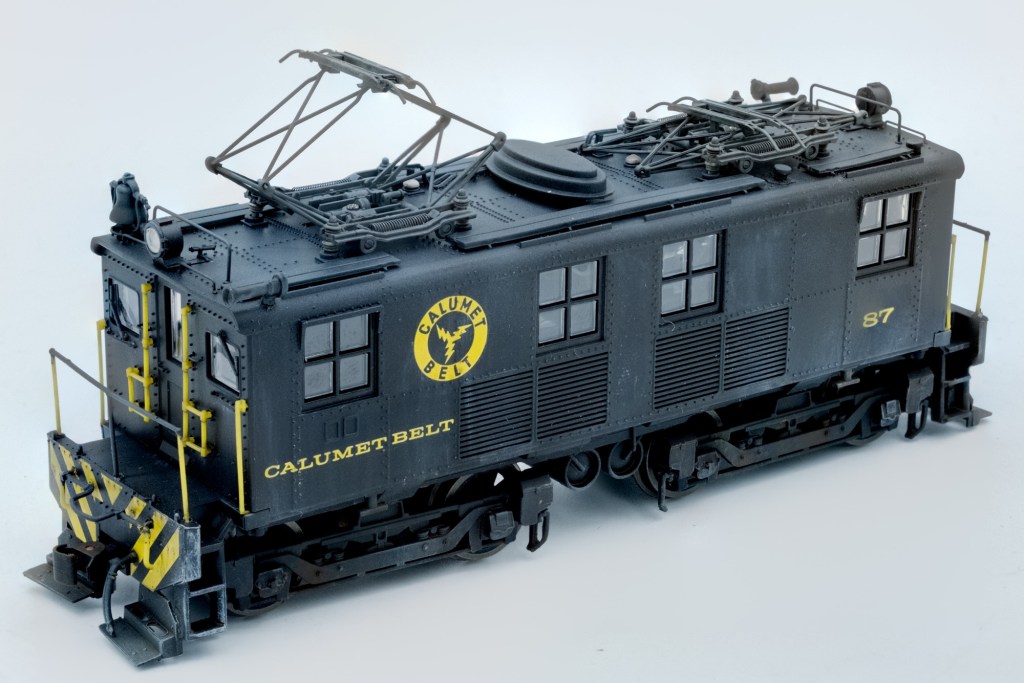
Tamiya Dark Brown panel liner was applied to all details above the frame sill, and Tamiya Brown panel liner, a rustier hue, to all details on the frame sill and below, including the truck sideframes. AK Fast Dry Thinner, applied with a paper blending stump, broke up and blended obvious tide marks and blobs of the panel liner.
After twelve hours or so, dots of Abt 502 Light Earth and Dust oil paints were applied randomly all over the model, and then blended in with a flat brush moistened with AK Matt Dry thinner, creating an overall ‘filter’ effect that effectively toned down the stark factory black paint. Brown and rust oil paint dots were applied to the truck sideframes and blended. After another overnight dry, AK Real Gunship Gray was thinned with 1 part paint to 2 parts GSI Creos Rapid Thinner, and lightly sprayed on the horizontal surfaces (the roof and end porches).
A final weathering step was application of brown and rust pigments to the couplers and the truck sideframes. The pigments were applied heavy and blended downward with a sponge pastel brush.
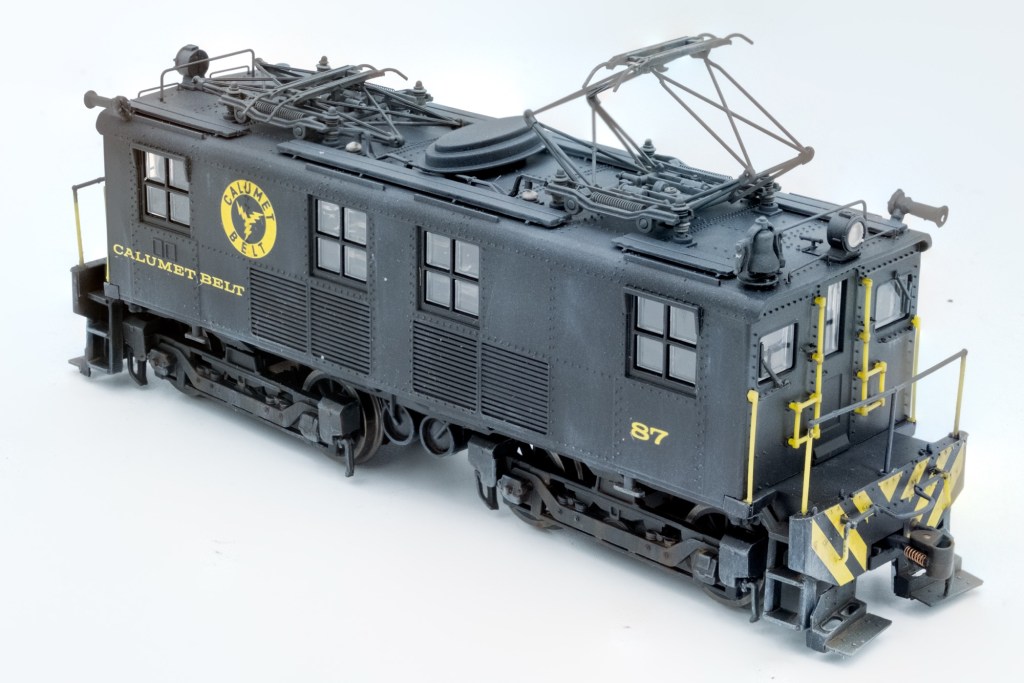
Once the weathering was where I wanted it, a final sealing coat of matt varnish was applied to the model. When the matt varnish was dry to the touch, all masking was removed from the windows.
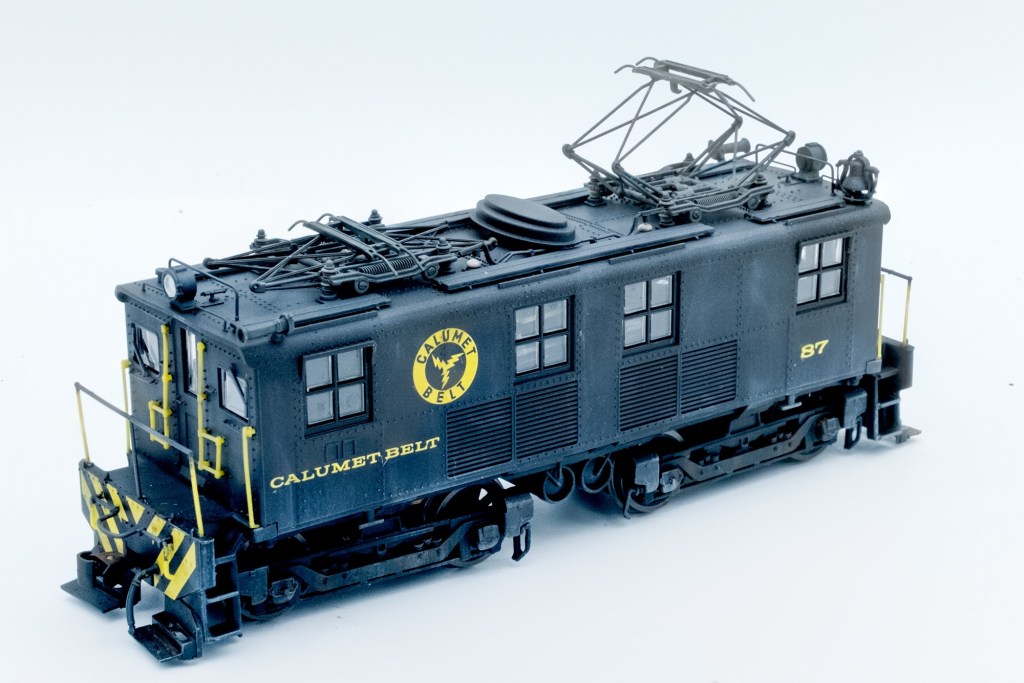
Calumet Belt 87 and its story provide an era-crossing new motive power option for my developing protofreelance concept. It will be just as at home knocking my favorite transition-era kit-built freight cars around an East Chicago steel mill as it will be a superannuated oddity working a gleaming new Japanese auto plant (irony!) out in the middle of a Porter County cornfield.
I’m already looking forward to my next Calumet Belt project—these projects continue to bring me joy and fire my imagination!


Leave a comment