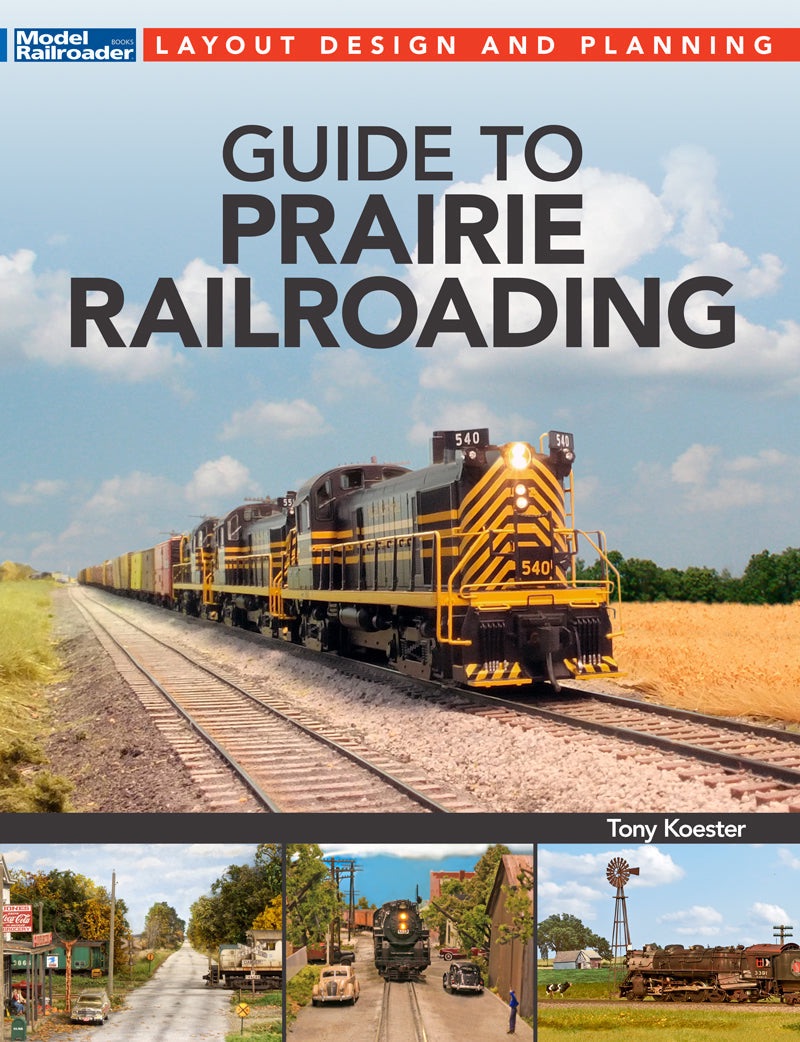
When hobby publisher Kalmbach announced a new Tony Koester book on modeling mountain railroading back in 2012, I responded with a blog post wishing for a flatland book in my blog, Up Dunes Junction.
As a native of the flattest Midwest, it was ironic to me in 2012, and still now in 2024, that Kalmbach deemed mountain model railroading deserving of book treatment, as if model railroaders hadn’t already been habituated to tunnels and mine tipples and bare rock faces and lichen- and puffball-covered hillsides. Kalmbach and the wider hobby press have been stuffing the gullets of model railroaders with mountains, mountains, mountains for as long as there has been a hobby press, and the most famous North American model railroaders–think John Allen, Allen McClelland, Malcolm Furlow, Tony Koester–all won their spurs on model mountains, covered with puffballs or not.
My 2012 post specifically suggested that Tony Koester pen a flatland model railroading book featuring Tony’s Nickel Plate and Bill Darnaby’s Maumee midwestern-themed layouts, covering flatland-specific scenery techniques, and perhaps building a project layout featuring a flatland theme.
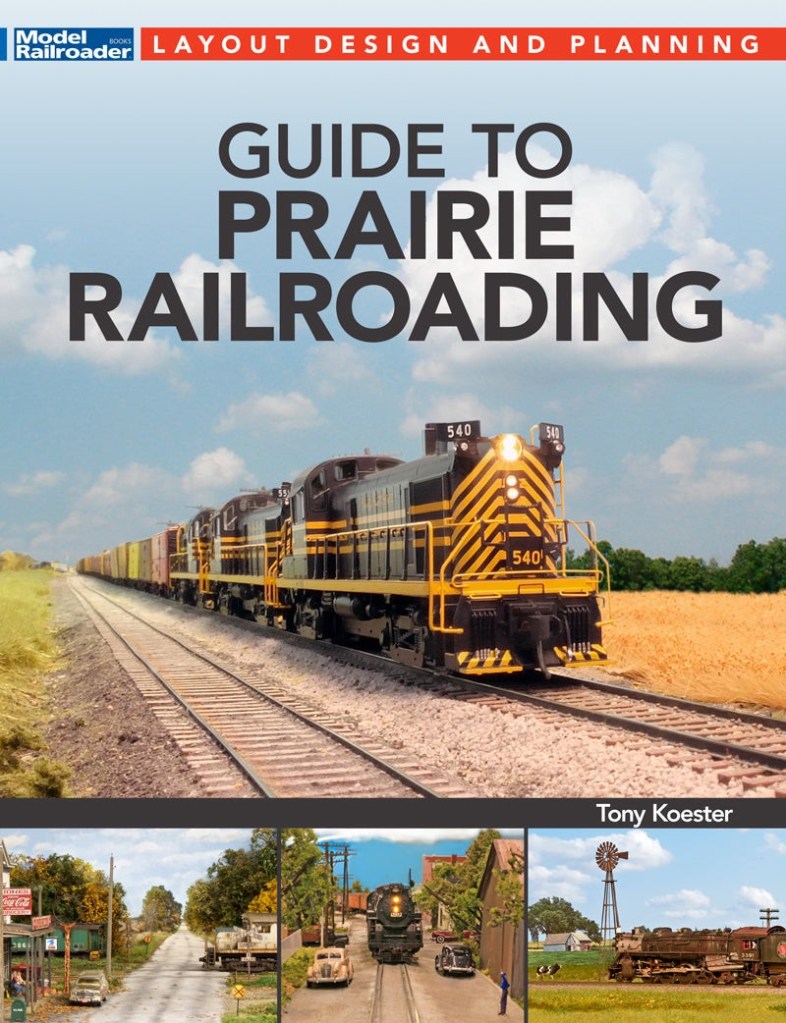
Indeed, my 2012 wish for a flatland model railroading book appears to have been granted (mostly, which we’ll get to). In what must have been among Kalmbach’s final book publishing acts before selling its rail and modeling titles off to Firecrown Publishing earlier this year, the Guide to Prairie Railroading by Tony Koester released in 2023.
Parts of my 2012 blog post might even be mistaken for Prairie Railroading‘s book proposal or pitch. The book does lean into the deservedly admirable Nickel Plate and Maumee layouts, and features several chapters on flatland-specific modeling elements such as specific vegetation and terrain features, typical flyover state industries and architecture, and effective use of backdrops.
Prairie Railroading also showcases other exemplary flatland layouts, and the consistent presentation of well-photographed, excellent modeling via quality printing and reproduction is where the book shines–leafing through this book is a treat. The work of Lance Mindheim, Jim McNab, Clark Propst, Jason Klocke, and others play worthy bit parts in Prairie Railroading.
Tom Johnson’s Cass County layout is especially well-covered. This layout, set in the 70s-80s northern Indiana of my youth and budding rail interest, has long been an inspiration to me on many levels; my own Dunes Junction layout aspired to Tom’s use of color and weathering techniques to capture a specific Hoosier mood. Photos of Cass County are sprinkled throughout the book to illustrate Tony’s narrative points and lucky readers are treated to half a chapter on it near the end.
Curiously, Cass County is among the only flatland modeling in Prairie Railroading that depicts modern or at least post-transition era railroading. At bedroom size, it’s also the only layout presented that is not a basement-dominating serpentine designed for high-headcount, high-concept operating sessions with dozens of trains in motion.
Cass County is the exception, in other words, in a book full of layouts and modeling that could only ever be ‘lifetime layouts’: totalizing, real estate-dominating lifestyle commitments beyond the pale for typical post-Baby Boom model railroaders whose time, space, and money ‘givens and druthers’ demonstrably differ from those of Baby Boom and older model railroaders. Implicit throughout Prairie Railroading is the assumption that ‘correct’ model railroading must involve
- Transition-era subjects in HO
- A large dedicated layout space of several hundred or even thousands of square feet
- Multilevel benchwork
- Scores of locomotives and hundreds of cars
- Baroque control, signaling, and communications systems
- Frequent operating sessions involving multitudes of like-minded model railroaders
The reality that large, complex–and successful–layouts are exceptional outliers, regardless of scale or prototype, is even acknowledged in the first chapter of Prairie Railroading. Tony praises a long Lance Mindheim quote explaining that smaller, less complex layouts are likelier to be more satisfying and achievable for most model railroaders, an idea Lance set forth eloquently in Model Railroad Planning 2023 (and in this blog post), and that admired, idealized large model railroads–including the book’s featured Nickel Plate and Maumee layouts–are “rare birds”. In the penultimate paragraph of the first chapter, Prairie Railroading exhorts readers to “consider [Lance’s perspectives] carefully”.
And then Prairie Railroading misses the opportunity to champion smaller, less complex flatland modeling and instead focus on the specific design and construction challenges of large, complex, and rare basement empires, such as working signal interlockings, multilevel benchwork, and the height of staging yards.
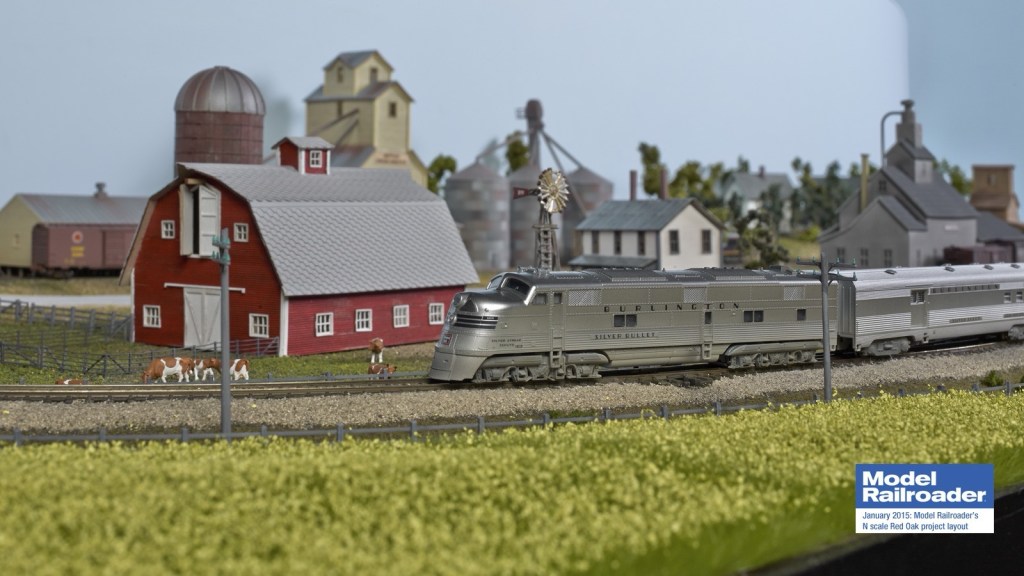
One low-effort approach to demonstrating small, achievable, and excellent prairie model railroad results would have been to reprint or digest past Model Railroader magazine layout projects. Tony’s own O scale Wingate project, of which there is at least one photo in Prairie Railroading, would have been one obvious approach to showing how to do an achievable flatland modeling layout. Even better would have been Model Railroader‘s 2015 N scale Red Oak project layout (downloadable PDF here). Red Oak was itself a fine example of well-executed flatland modeling, also in a scale other than HO; even a few photographs of this small but mighty layout would have been welcome.
Prairie Railroading would not have needed to look very far to round out the book with more more modern or at least post-transition era flatland railroad modeling. To be fair, there are cameos of Bernie Kempinski’s N scale prairie modules and Jim McNab’s Iowa Interstate layout, both modern subjects. However, modern prototype modeling and operations contributions from Model Railroader regulars Pelle Soeborg and Lance Mindheim, for example, would have been right at home, and would have made for a more complete and inclusive treatment of prairie or flatland railroad modeling.
Perhaps what I was unfairly expecting was a Guide to Prairie Railroading authored by the late (and sorely missed) Iain Rice, who consistently demonstrated that model railroading with a few cars in a few square feet can be just as great, or even greater, than a basement empire with its own telephone system.
I recommend Prairie Railroading to modelers of North America’s great middle expanse, and to admirers of great railroading modeling and photography. Prairie Railroading‘s great inspirational and knowledge triumphs are not undone by its lapses, and undoubtedly many readers will be pleased as punch to be in the company of the usual (conceptual) suspects. My copy is already well on its way to wearing out, as are many of my favorite modeling books.
 Further Up Dunes Junction
Leave a comment